An Appointment Reminder and a New Offer Are Different Messages
Review appointment status, message purpose, and contact permission before sending reminders or adding promotional offers.
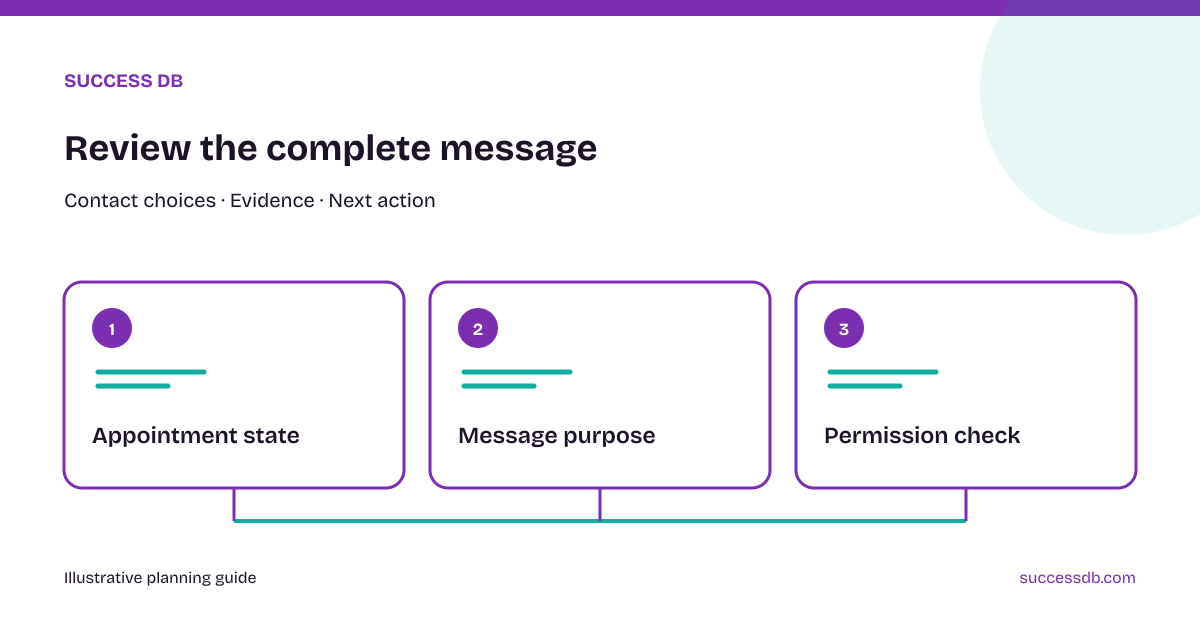
A scheduled appointment creates a reason to consider a confirmation or reminder; it does not, by itself, establish permission to send one by any method. An unrelated offer is a different communication. Keeping those purposes separate helps a team avoid treating every booking record as a marketing list.
Start with the actual appointment state
First confirm whether the slot was booked, requested, changed, or canceled. Then decide what information the customer needs to complete that specific transaction. A request that has not been confirmed should not trigger wording that says the appointment is already set.
Keep promotional decisions separate
If the business wants to invite the person to buy another service, review the appropriate permission and suppression records before sending. An appointment note should not overwrite a stop request. Assign an owner for both the operational message and any broader campaign; do not let one record field serve both purposes without review.
Work through one case
Illustrative: Compare “Your appointment is tomorrow at 10” with the same reminder followed by “Add another service this week.” The added sales pitch changes what needs review. Check the actual message and its sending method instead of assuming that any text containing an appointment time is purely informational.
Even a message containing only appointment information can require consent depending on technology and applicable rules. A booking, a preferred contact channel, and sufficient consent are separate facts.
Apply the questions to this example
Illustrative worked example: These sample notes extend the case above. Roles and record locations are proposed for the example, not descriptions of a customer or this brand’s configured service. Adapt them to your own process.
| Step | Question | Sample evidence, owner, and next action |
|---|---|---|
| 1 | What is the appointment state? | Reminder draft says tomorrow at 10; booking owner verifies the confirmed appointment record before sending. |
| 2 | Is the proposed message about that appointment or a new offer? | The second version adds a sales offer; message owner reviews the complete wording and does not label it reminder-only. |
| 3 | Which owner checks consent and stop requests? | Messaging owner: check the sending method, permission evidence, and applicable stop requests before either version is used. |
Put the next step in writing
Read the request-versus-booking guide before designing reminder copy. Accurate status and accurate purpose belong together.
Accurate appointment status is only one part of the send decision. This comparison is general guidance, not legal clearance for either reminder; review the complete message and the method used to deliver it.
Further reading: FCC call and text guidance · FTC telemarketing resources.
Contact Success DB to discuss the inbound workflow described on this site.