Estimate Usage for an Appointment-Driven Line
Booking requests, reschedules, and customer-success questions take different amounts of time. Estimate each before treating one average call as the whole workload.
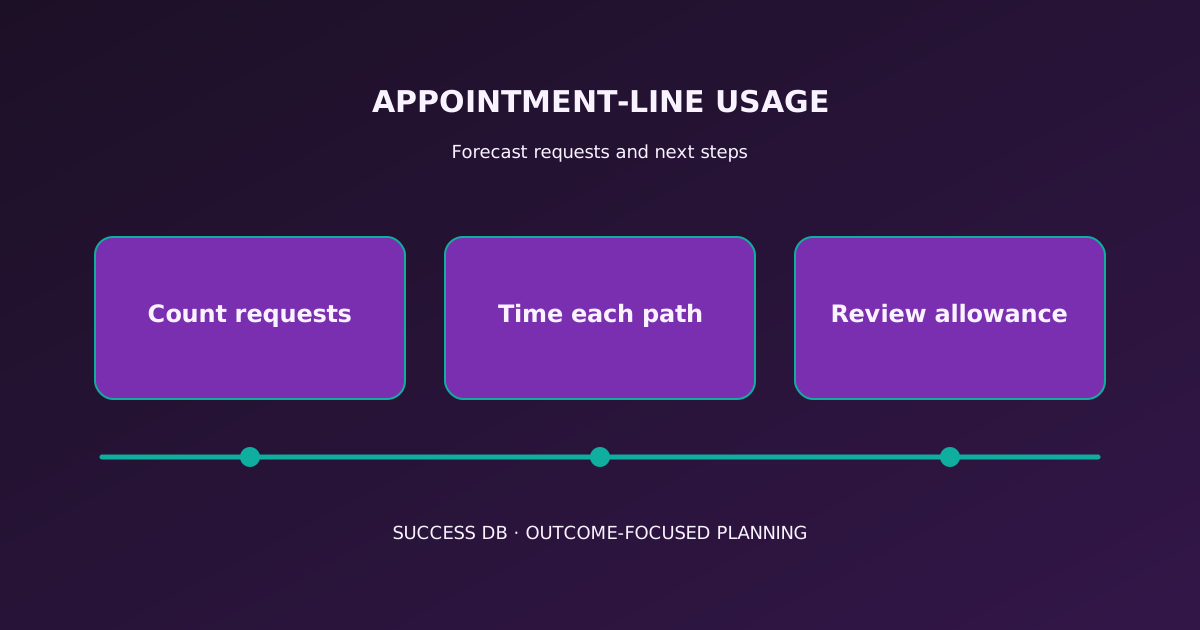
An appointment-focused line can receive more than new bookings. Existing customers may need a reschedule, a status answer, or a person to decide the next step. Budgeting all of those calls as if they were identical leads to a weak usage estimate. A better approach is to classify the request first and use your own expected duration for each class.
Separate the three kinds of inbound work
Build a simple monthly worksheet with one row for new appointment requests, one for rescheduling or changes, and one for customer-success questions that need an owner. Add an exception row if a caller cannot be offered a confirmed next step on the call. For each row, multiply expected call count by observed or estimated inbound minutes. Add the totals to estimate monthly phone use.
Keep the result of the conversation separate from its length. A caller can request an appointment without receiving a confirmed slot. Our request-versus-booking guide explains that distinction. This worksheet helps you budget the call volume around it without implying live calendar availability, automatic reminders, or a booking guarantee.
Apply the published usage allowances
Success DB's standard AI Phone Agent subscription is $199 per month and includes 500 inbound minutes and 500 SMS per billing period. Additional inbound minutes cost $0.12 each; additional SMS cost $0.02 each. There is no setup or onboarding fee, initial call-flow setup is sales-assisted, and the service is month to month.
Illustrative month, not a quote: If the worksheet totals 600 inbound minutes and 550 SMS, that is 100 additional minutes ($12.00) and 50 additional texts ($1.00). The illustrative phone-service total is $212.00 before other applicable charges. At 470 minutes and 440 SMS, the standard $199 base would cover usage. Actual totals follow actual metered use.
Use the estimate to tighten the next-step rule
If reschedules take longer than expected, ask whether the caller is being asked for information the receiving team already has. If unconfirmed requests are common, name the person who reviews them and decide what the caller should hear while the request is pending. These are buyer-owned workflow decisions, not claims that a particular calendar or record system is connected.
Bring your call mix and outcome definitions to a booking-flow conversation. It is more useful than promising that every call becomes a confirmed appointment.
For the current subscription details, see the Success DB terms. To discuss a call mix or workflow for your organization, contact Success DB.